Walking the Cape Scott Trail
A coastal trek and cold swims on Vancouver Island
Written for The Outdoor Swimming Society’s magazine | Elsewhere
Rachel Gee went to Vancouver Island in summer 2025, carrying a backpack, a water filter and a swimming costume – the latter as essential as the rest.
For four days, she trekked and swam the Cape Scott Trail along the wild northern coast, a demanding route which runs through old-growth forest, crosses muddy boardwalks and spills out onto beaches where the Pacific arrives. A mix of restless swells and moments of calm, here she takes us through her journey.
The journey
The Cape Scott Trail is at the northern tip of Vancouver Island and reaching it is very much part of the adventure. I met a former uni friend and her partner in the coastal city of Vancouver, where they now live, and we spent a couple of days unwinding and getting ourselves ready for what lay ahead. I wandered amongst the towering trees of Stanley Park, stocked up on dried meals and bear spray, a first for me.
On my second day in Canada, we set off together, driving to the ferry at Horseshoe Bay, before a push north to Port Hardy from Nanaimo – a sign of how rural things were about to become. There we said goodbye to civilisation and took a two-hour offroad vehicle along gravel logging roads to the trailhead. A mix of excitement and faint nerves settled over us as we travelled further into the wilderness. We were welcomed by a beautiful, saturated green – not the gentle, storybook hues of my childhood in the Trough of Bowland, this was deeper, almost primal.
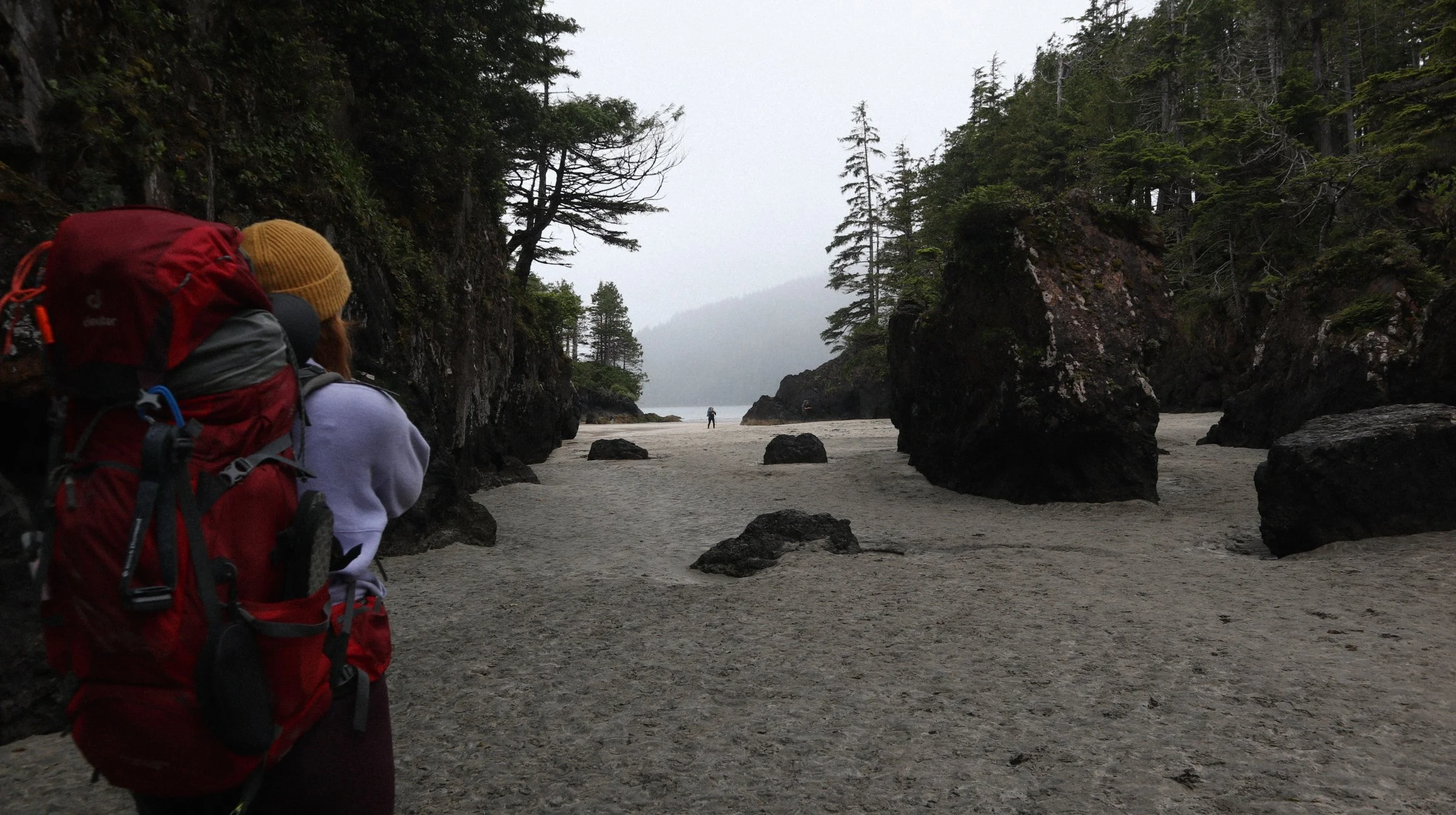
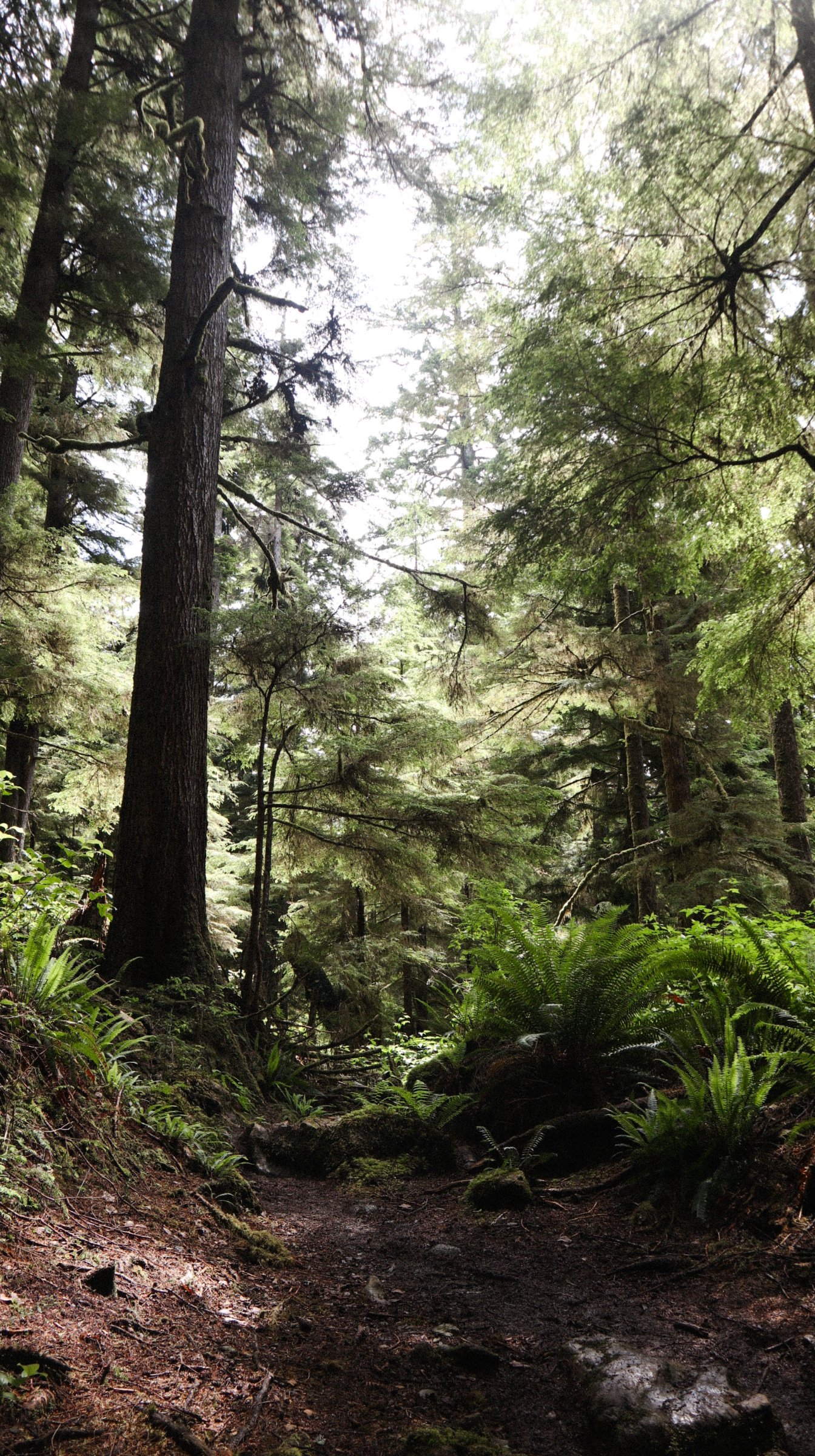
The next morning, we set out, weaving around fallen branches, across slippery boardwalks and mud. The route doesn’t have too much elevation, but the uneven terrain and long stretches of sand make it a technical one. After a humid 11 miles and seven hours under heavy packs, we arrived at our location for the night: Nels Bight. An untamed beach stretched before us, with sea kelp piled up along parts of the tide line, the gentle murmur of the waves drawing me in. I dropped my bag for a moment, resting my shoulders before pitching my small tent, the forest standing tall behind me. Nels Bight is praised as being the best camping spot along the trail, with a safe freshwater source close by and bear lockers to store your food safely. The waves looked ferocious, cold and heavy. Even from the sand you could feel their presence, a deep thudding force that travelled up through the beach and into my body as I stood by the shoreline.
Nels Bight
A tidal whisper urged me to run to the ocean. As I waded in, my aching shoulders loosened, and my tight legs surrendered. The water was cut up and restless, in a way that feels almost dangerous and vividly alive. The cold sharpened my awareness of my body, drawing attention to every hidden ache; a hamstring injury I had overlooked twinged and released. The chill traced my collarbone, and I noticed the faint blueing bruises that now decorated it, a tribute to my borrowed pack. The ocean cradled me in its cathartic arms. My friends are novice sea swimmers but joined me for a quick dip, then we ran back to the tents and knocked back a dram of cinnamon whisky to warm up.
After a dried meal of veggie chilli, we headed to a river a few hundred metres away to fill our bottles before bed. The light was beginning to thin now, as we settled into the evening. In front of us: a black bear, completely absorbed in a world of sea kelp. We had wandered a little too close before noticing it and suddenly stopped in our tracks. It stood magnificent at the water’s edge, its black fur catching the last light of the day. It moved slowly and unhurried as it focused on its meal. I found myself unable to look away, mesmerised by its presence. It didn’t feel like it had noticed us, though of course it would have. Acutely aware of its surroundings, its manner was not one of softness, but one that demanded respect. Had it wanted it could have moved faster than anything towards us. Adrenaline sharpened our senses, and we began to move slowly away. We walked the long way back, through the river, to give the bear space. Our wet trousers and feet, an offering of gratitude for allowing us to share its water. I watched from a safer distance for a while, this truly remarkable creature, wild, calm and completely at home.
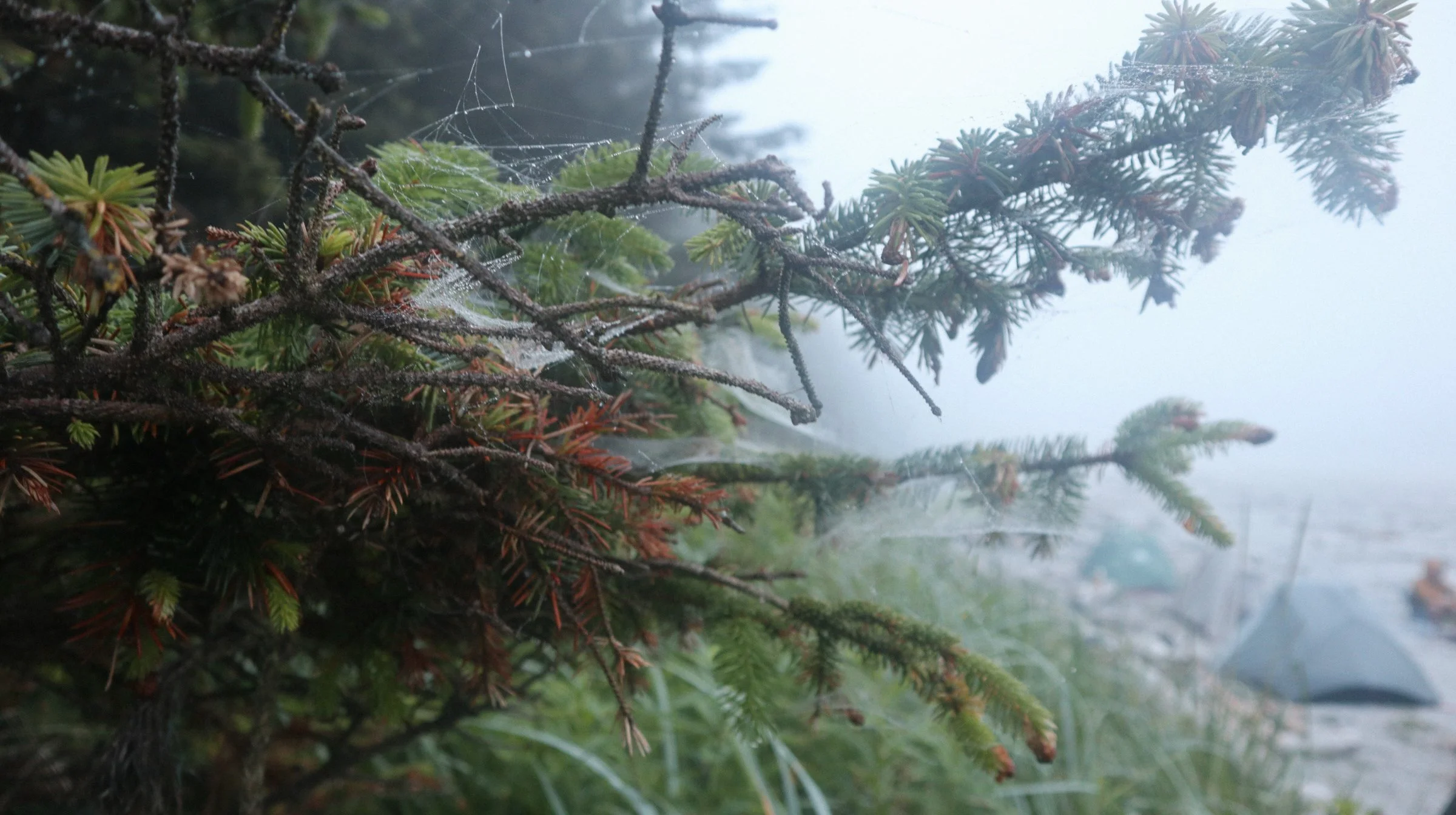
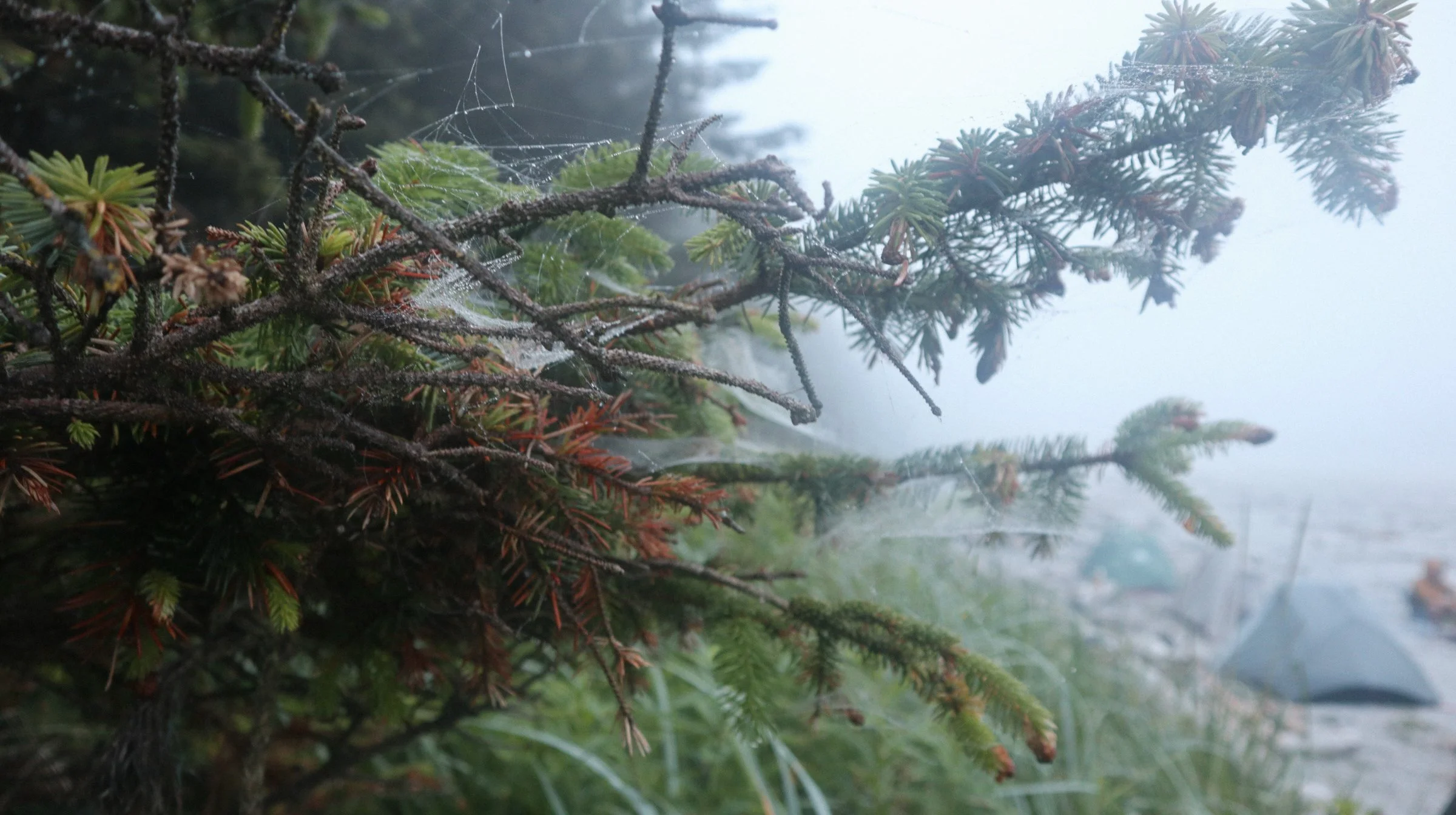
When we woke the next morning, a coastal fog had rolled across the beach, but between it we could see two more black bears. I felt emotional as I watched their silhouettes dance in the distance, the pale grey cloud mixing with the forest behind them. It felt like a rare privilege to be able to witness these beautiful creatures, so at one in their surroundings.
Cape Scott Lighthouse
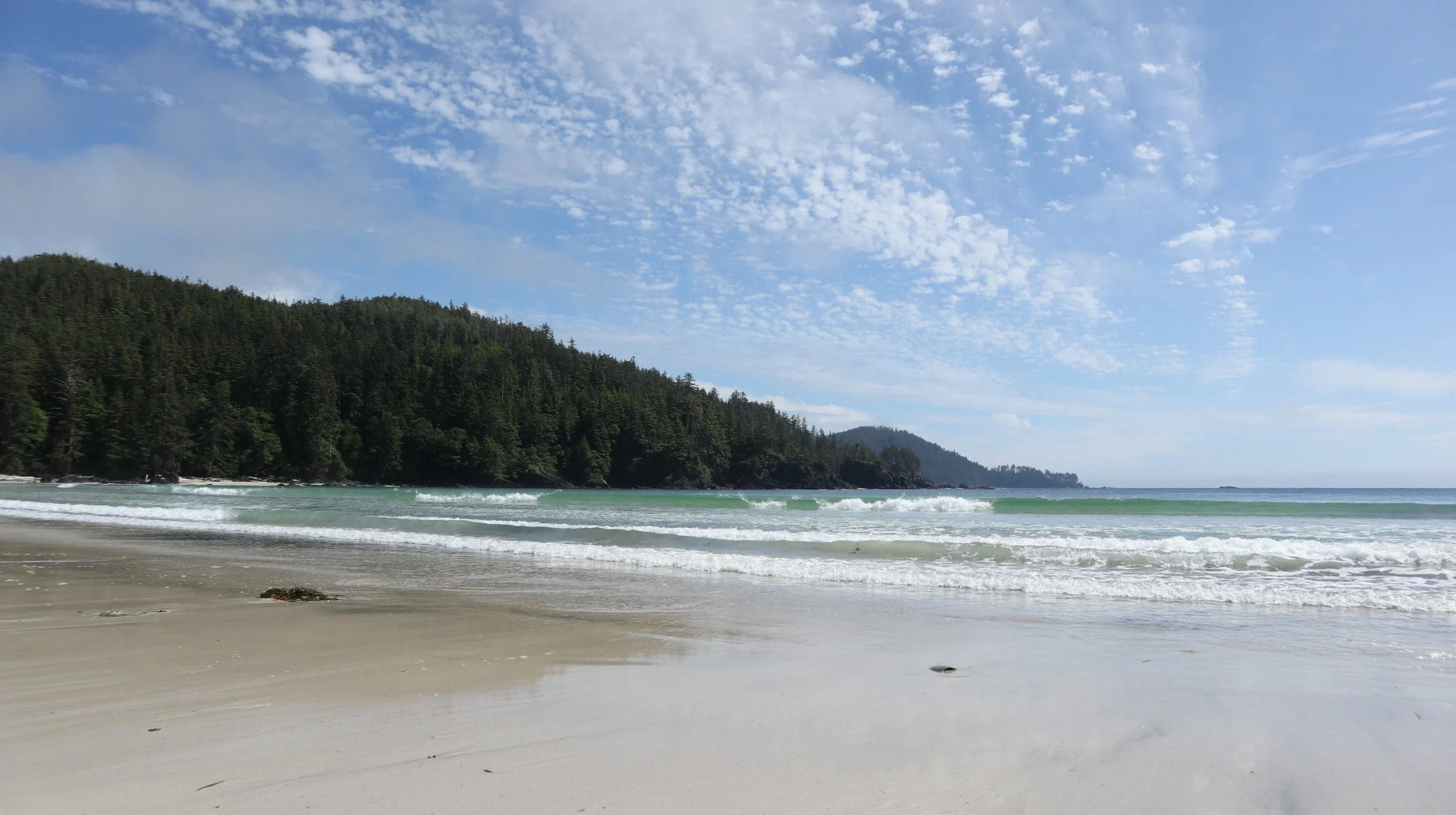
The second day was an out-and-back walk to Cape Scott Lighthouse, so we zipped up our tents and set off with lighter packs, sharing one between us with supplies. It was the hottest day of the trip, and by the time we reached Guise Bay the sun was blazing overhead. After a trek across sand and through forest, the trail opens up to paradise. A honey-coloured shoreline decorates the water’s edge, inviting you to kick your boots off and let your feet sink into its soft embrace. Driftwood is scattered across its far corners, providing tempting spots to pause and reset.
The Kwakwaka’wakw – an indigenous group of the Pacific Northwest Coast, call this area Yichaledaz; where the canoes run ashore in heavy swell. Not today, compared to Nels Bright it was calm. I threw off my clothes and ran in, in my underwear. I floated there for a moment, looking up at the sky, relishing the coolness. A pair of bald eagles flew above me as the sun continued its quiet work, dusting my nose with freckles.
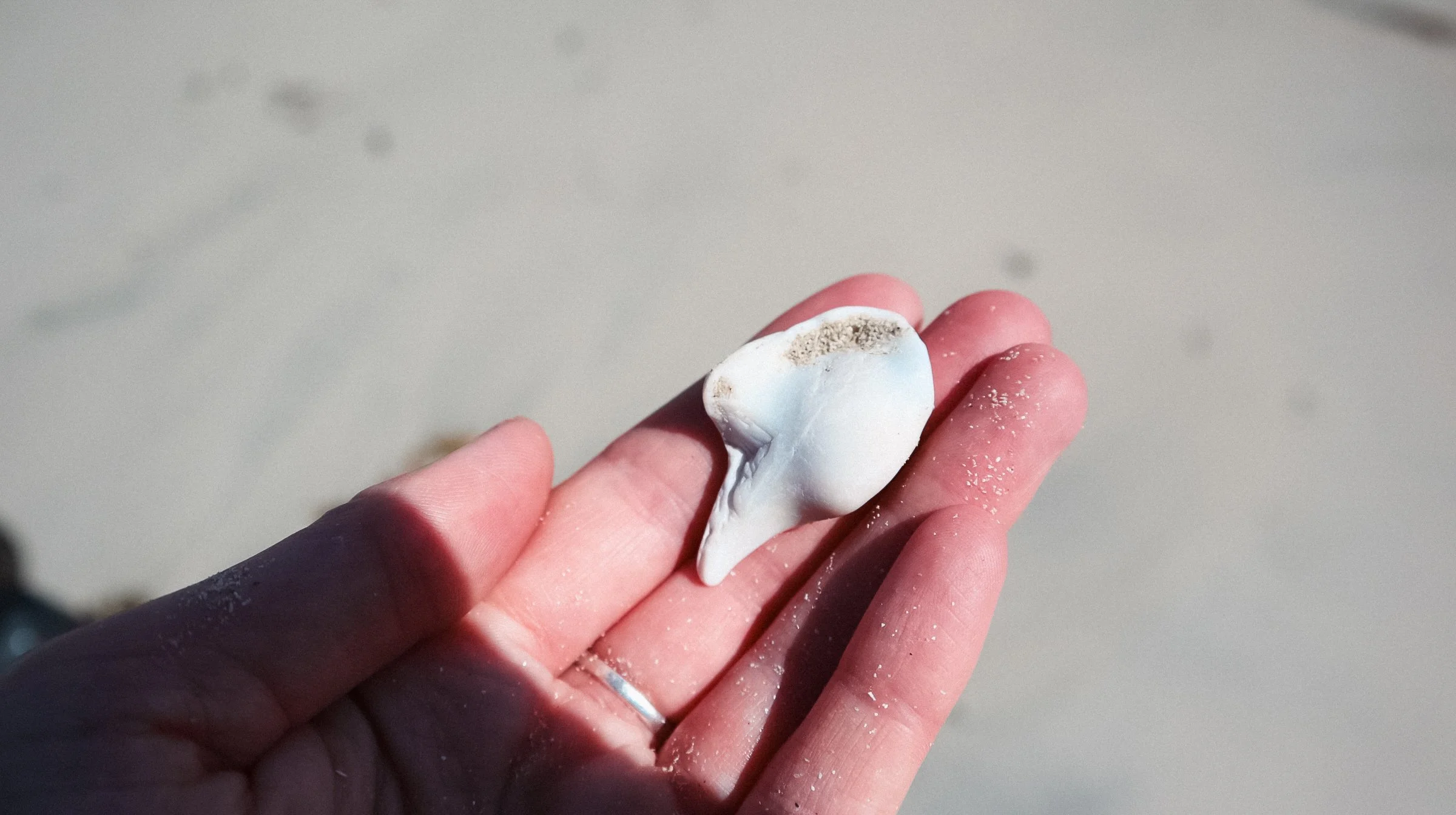
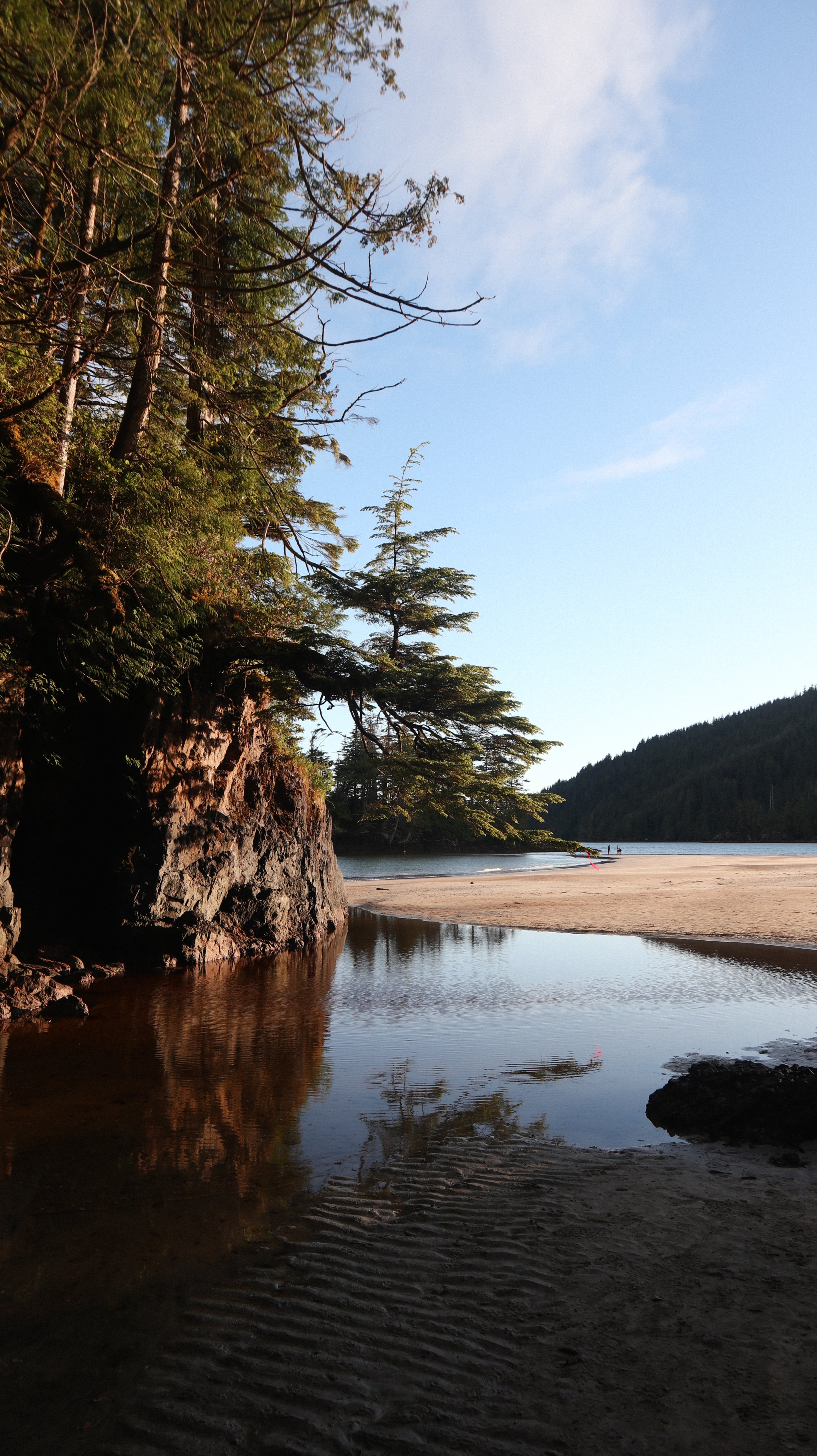
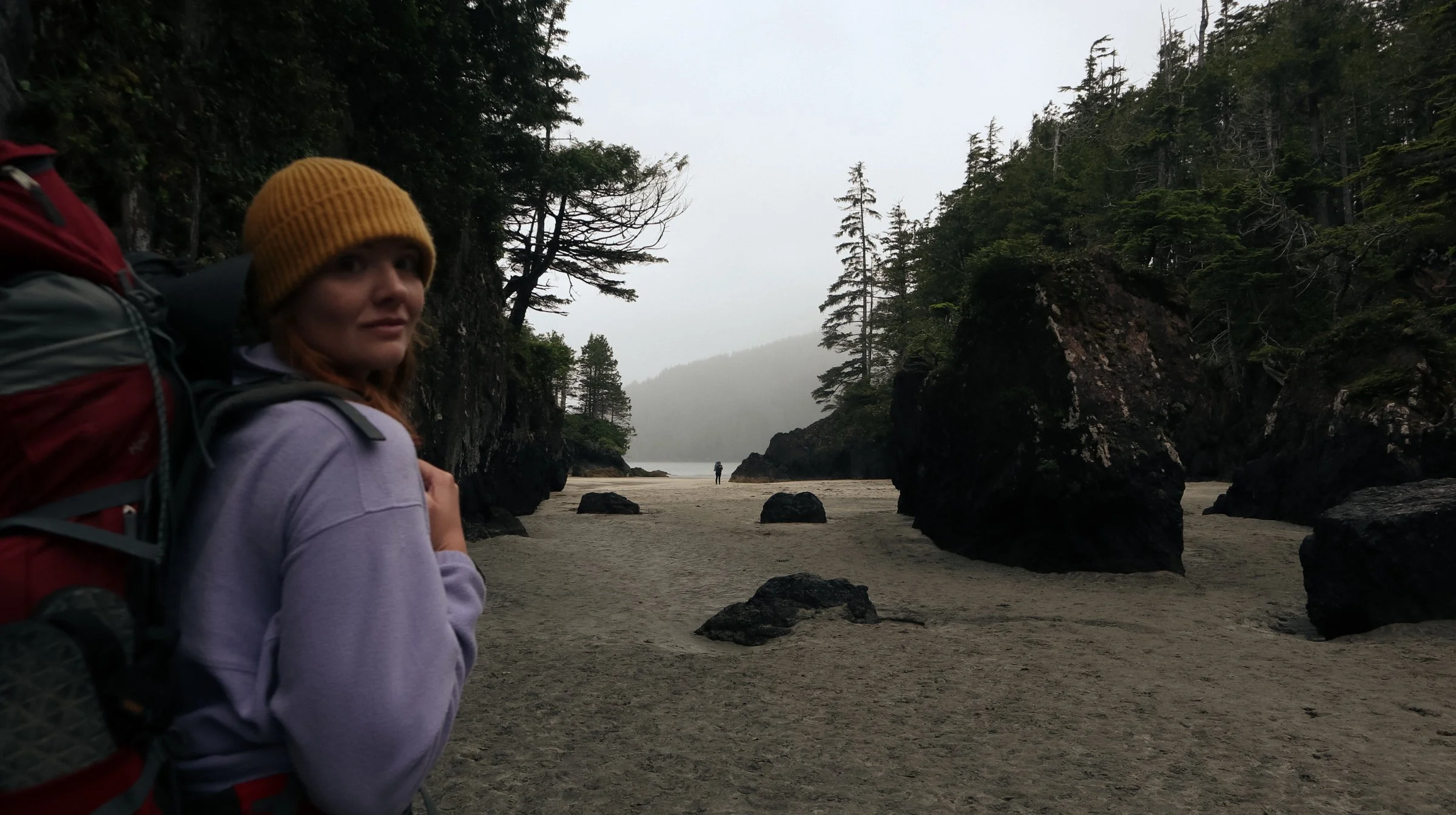
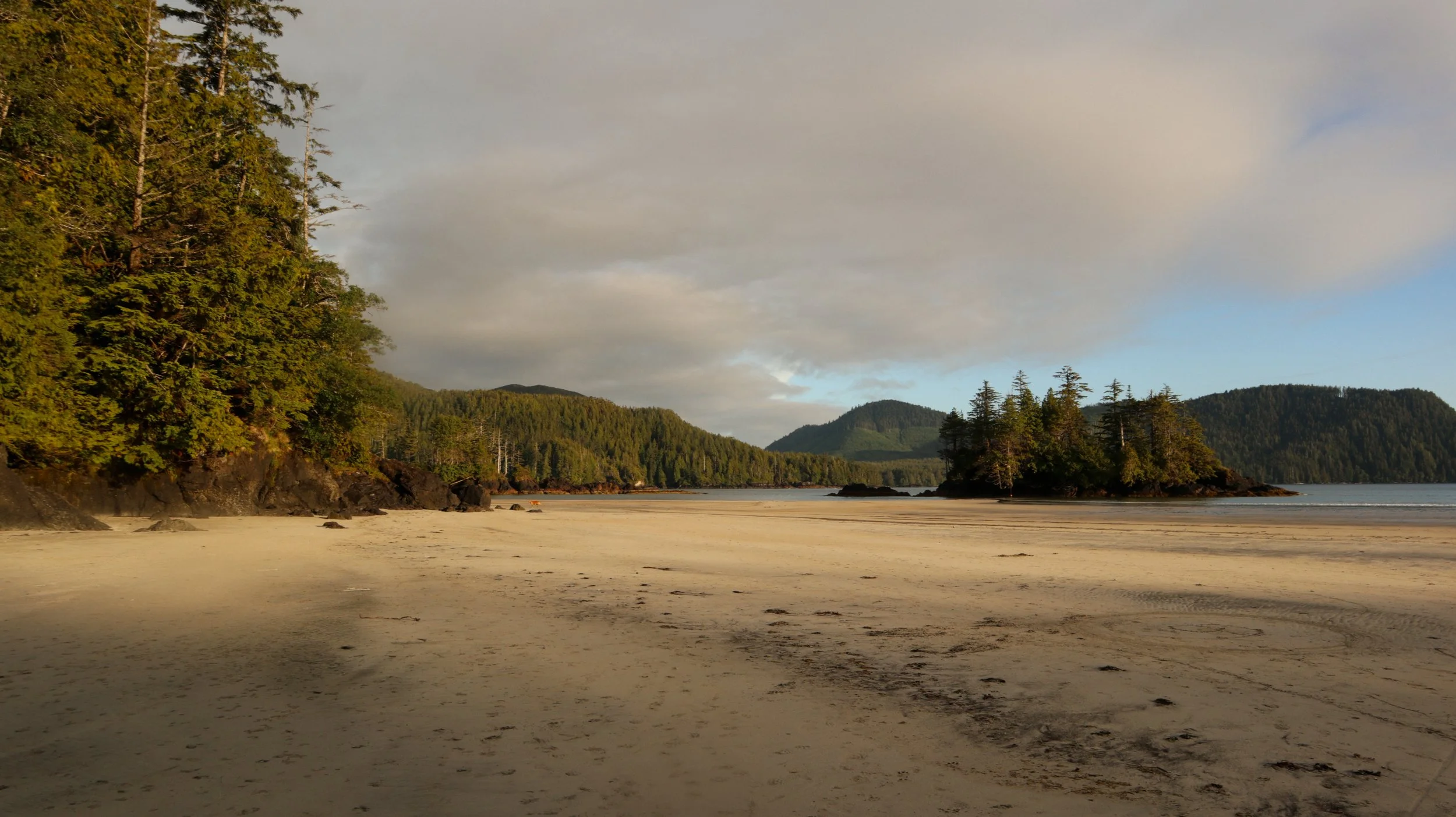
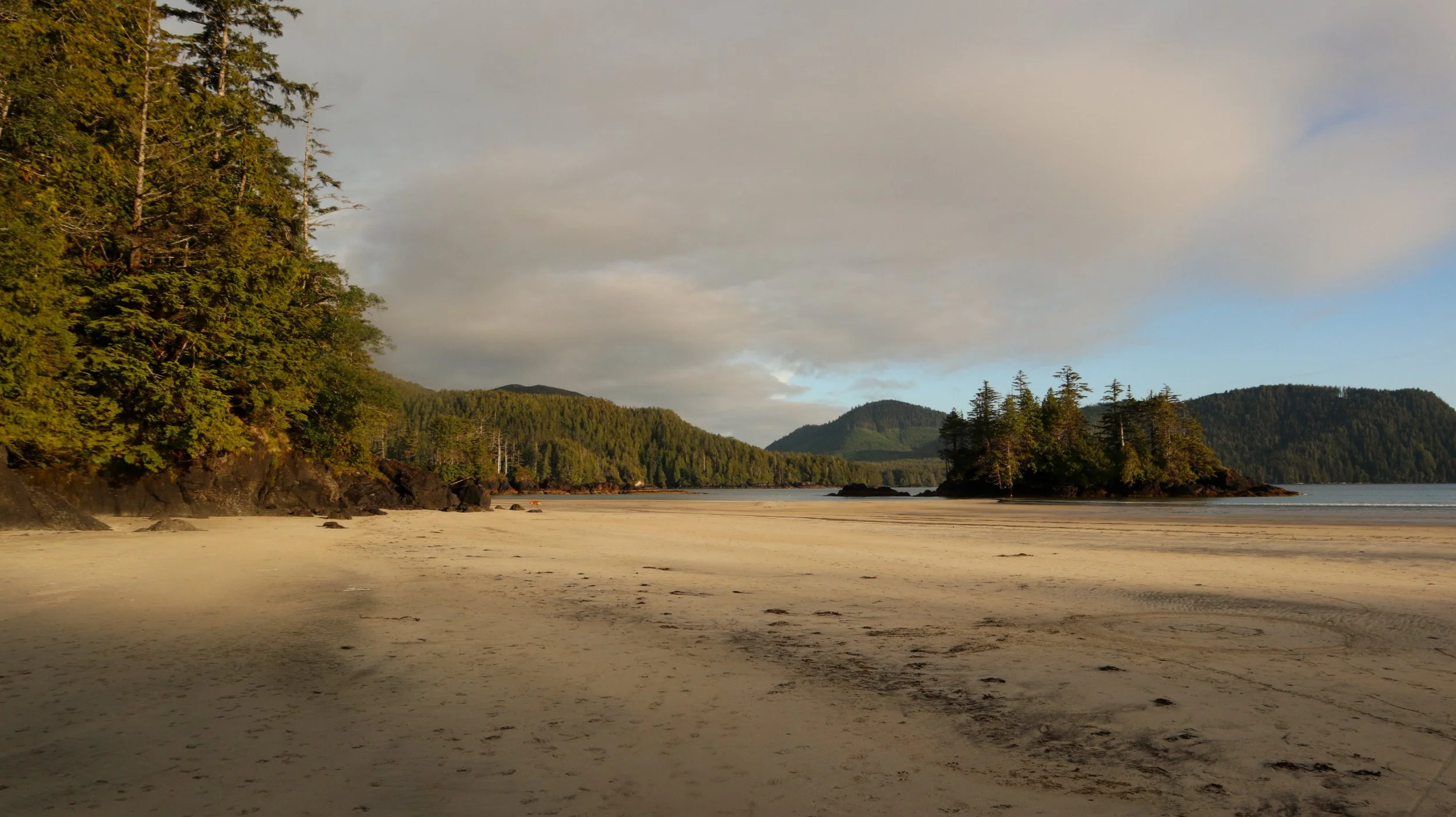
On the way back to base, a fellow hiker pointed out wolf tracks imprinted on the sand, heading into woodland. Along this coast, the wilderness feels intensely present – bears, wolves, cougars, elk and deer roam freely, sharing resources. We followed the tracks inland and found only a small tuft of wolf fur in a meadow beyond. A fleeting gift left behind. The third day took us to San Josef Bay, a five-mile extension of the full trail. We arrived at high tide, the ocean full and sparkling, so close it felt you could step onto its surface. To reach the second beach here, we scrambled up a steep hill, hauling ourselves up by rope and climbing over fallen logs. The path narrows, then drops. We emerged through what feels like a cave, onto a glowing sandy beach, a small green island floating just offshore.
It was sunset when my friend and I went down to the water for our final swim. I waded in, eager to rinse away the mud and sweat of the trail, ducking under the surface as the waves rose and refreshed my salty hair. We swam out a little as the sky flared with colour. Floating there, I became aware of how my love of swimming shapes the way I move through water, and through place. As the sun sank and I grew cold, I felt for a while, as though I belonged to the coast – alongside the bears and wolves – I wasn’t just passing through it. Then we turned back and swam in, as the sun slipped slowly beneath the sea.